Donkey Poker Terminology
Posted : admin On 4/15/2022Poker Glossary View All In other languages: Italiano; Donkey. A 'donkey' is a derogatory term for a bad player. (Submitted by TwoGun). Poker Terminology & Meanings. The game of poker has its own slang or “poker talk.” If you are new to poker, learning the poker slang will greatly improve your knowledge of the game. From the small blind to the straight flush, here is a poker glossary of the important poker terms to know. Act: check, bet, raise, or fold. Donkey translation in English-Cherokee dictionary. Found 0 sentences matching phrase 'donkey'.Found in 0 ms.
Posted by Charles, August 6, 2014
The term was popularized before the advent of online poker, and is therefore used more commonly in brick and mortar settings. Internet card rooms have developed their own lingo, and “donk” or “donkey” is the insult of choice there. Nog 'n slang term wat gebruik word deur sommige is 'OTM,' soos in 'n kontant-dispensing masjien. 'N Ervare speler kan gefrustreer word wanneer hy teen donkies speel, of hulle kan die voordele geniet om goed teen hulle te speel. Betekenis van die Poker Termyn Donkey. Die donkie is lankal 'n simbool van koppigheid en onkunde of beperkte.
Whether you hope to be a card shark at your local casino or want to make a name for yourself playing online poker, you won't get far without reading your opponents. When you're learning the game, you'll likely hear players being called a lot of things, from 'calling stations' to 'nits,' but one name you never want to be called at the table is a poker donkey.
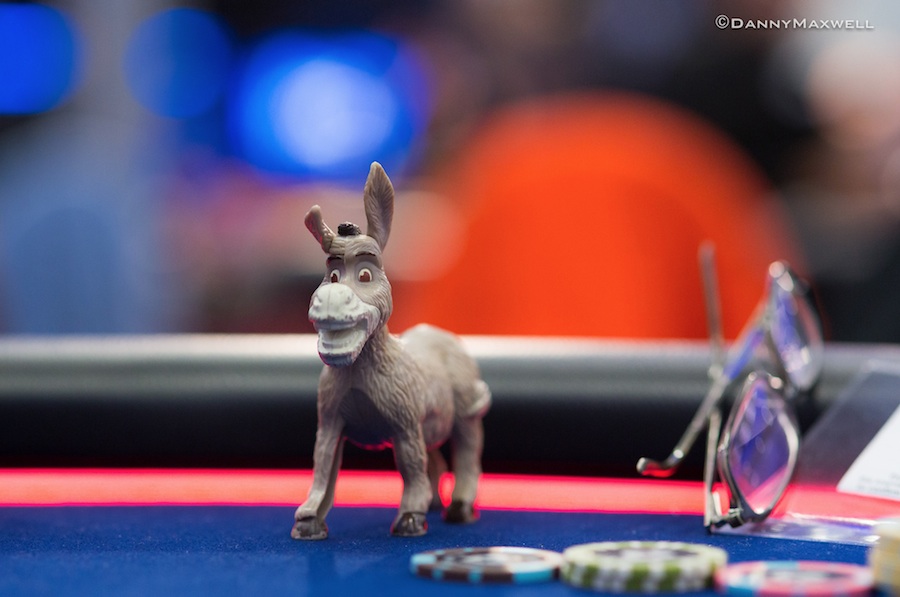
Poker Donkey: A bad player (formerly known as a poker fish).
Alternate definition = a gambler. A terrible gambler.
Sometimes known as 'fish' or 'pigeons,' donkeys are broadly defined as bad players. Though the term initially referred to weaker players who are easy to read and incapable of making informed decisions, it has since grown into a specific description of loose-aggressive players who lack skill or strategy at the table. Whether it's due to ignorance of the rules, inattentive gamesmanship or perhaps a little too much to drink at the table, these players are notoriously inconsistent - and can be a nightmare for the serious player. Especially when it comes to poker tournaments.
Though donkeys are their own worst enemy when it comes to the table, typically frittering their money away on go-nowhere draws, middling pocket pairs or ace high, they have been known to get hot at the table, something that will put almost any serious player on tilt. That these players don't know, or don't care, how to play can make them tremendously difficult to read, but fortunately there are some strategies to dealing with donkeys at the poker table.
Tighten up
It may be hard to sit out a lot of hands in a row, but the best way to deal with an aggressive donkey is to play conservatively. Donkeys will play any two cards, with the more aggressive ones coming in with ridiculous raises at the mere sight of paint. While this aggressive style will likely serve them well in the short run, it's only a matter of time until they walk into a legitimate challenge – and whether it's from you or not, watching a donkey ship their chips across the table because they couldn't recognize that they were holding rags is one of poker's small treasures.
Bet methodically
While poker is a game of skill and observation, it's also a game of math. Knowing your odds, how much money you have in the pot, and how much to bet is essential for success in the grand scale. Donkeys, however, have no concept of this, and bet with big round numbers that they think will be intimidating. This means that they will likely lead out with a pretty sizable bet whenever they come into a hand, regardless of the hole cards they may be holding. Keep this in mind when playing with donkeys, as betting below their normal level is essentially inviting a raise, and more often than not, you'll just want them out of the hand entirely.
Position is your friend
You will always want to be sitting to the left of the donkey. This allows you to watch the donkey's move before you have to make a decision of your own. This is a great strategic advantage, and will allow you to avoid being priced into a big pot with a marginal hand. This is also useful for those times when you do have a great hand, as it will allow you to…
Trap that donkey!
Loose aggressive players who may not be terribly attentive are very easy to string along with mild bets. By either checking and letting your opponent drive the action, or betting low and letting the donkey call you, you can easily string them along and add their chips to your stack. Keep in mind, however, that the cards will fall where they may, and that sometimes the best laid plans will blow up in your face.
Beware the fish
Donkey Poker Terminology Cheat
Though it's important to be mindful of any draws on the board no matter what level of player you're dealing with, it's particularly important to watch out for suspicious draws when dealing with a donkey. Remember, there's little accounting for what two cards these inexperienced/ irrational players will bet on, so keep an eye on strong draws that one would be a fool to play - as those kinds of cards are right up the donkey's alley.
Poker Terminology And Donkey
Don't bluff
Every memorable poker story seems to involve a world class bluff, and while it is an important strategy to employ against seasoned opponents, you can't bluff a donkey. Donkeys are unpredictable, it's true, but you don't want to assume that your high card will play only to be crushed by a pair of 4s.
The cutoff is the nickname for the player in the seat to the right of the dealer button position in a game of poker. It is the second-best position in a hand of poker. It's also known as the cutoff seat or cutoff position and may be abbreviated as CO.
Donkey Poker Terminology Chart
Origins of the Poker Nickname Cutoff
There are a couple of explanations for why this position is called the cutoff. One is that in a friendly game where the button position is also the dealer, the player to the right of the dealer would cut the cards after the shuffle. This isn't the case when playing in a casino or poker room and there is a dedicated dealer, and the players do not cut the deck after the shuffle.
Another theory is that the name stems from the position being a good one to cutoff the three players after him when placing bets after the deal. The player in the cutoff position can raise and intimidate the players in the button, small blind, and big blind positions to fold.
Advantages of the Cutoff Position in Poker
In Texas Hold'em poker, the order of seats is small blind, big blind, under the gun, cutoff, and button, with the dealer, positioned to take action after the button position. If there are more than five players, the others are positioned between the under the gun position and the cutoff position. The button position moves with each hand so that each player will have a new position for each hand.
On the deal, the players are given their two pocket cards and starting with the under the gun position, they have the chance to fold their hand, call, or raise. The cutoff position has the advantage of knowing how the players before him are playing their hands and only three players after him. If the other players have all folded, it's a good position from which to call or raise to intimidate the button, small blind, and big blind into folding so you can steal the blinds. If the cutoff has a strong hand and other players have called, it is a good position for raising.
After the flop, if the cutoff hasn't folded, he is either the last player to play the hand or the second-to-last if the button player hasn't folded. This is a strong position as the player gains knowledge from how the players before him are betting their hands.
The cutoff player is in a better position to play marginally-strong hands than the players in positions that play earlier in the sequence. In this position, you can play a looser game. However, you aren't the only person at the table who understands that, and the other players will expect more aggressive and looser play from the players in the button and cutoff positions. You will have to use good tactics and read whether or not the players in the blind positions are likely to defend them.